
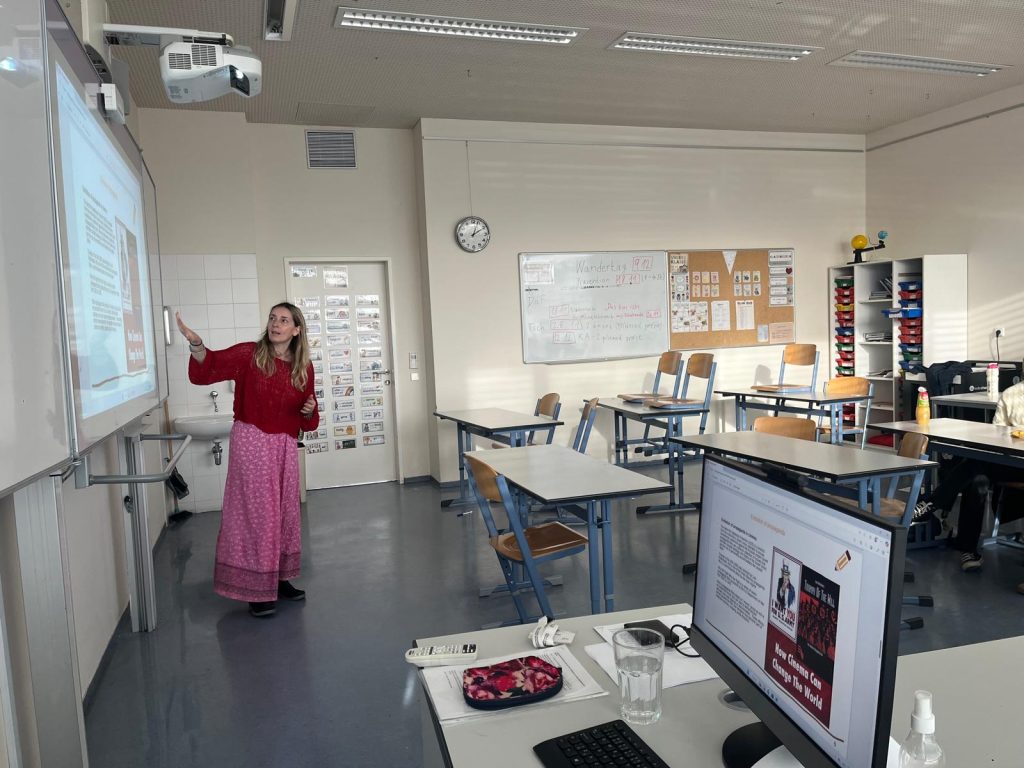
As part of the international project Le Case di Micòl, students from the Prague Film School participated in an engaging and thought-provoking workshop titled “Alfieri della Memoria”. The first session focused on the intersection between human rights, media literacy, and cinematic language, offering the young filmmakers a deeper understanding of how narratives can shape, manipulate, or enlighten public opinion.
Unpacking Human Rights and Media Responsibility
The lesson opened with an introduction to the Universal Declaration of Human Rights, setting the stage for a discussion on freedom of expression, the right to information, and the responsibility that comes with creating media. Students reflected on their role as future storytellers and the ethical implications of working in film and media.
Disinformation and Fake News in the Digital Age
A key part of the session focused on how disinformation spreads today, especially through social media platforms. Students analyzed current examples and debated how fake news impacts democratic societies, civic awareness, and minority communities.
Propaganda in History and Cinema
The workshop then traced the evolution of propaganda, especially its use in 20th-century authoritarian regimes. Students examined:
- Nazi propaganda, which portrayed Jewish people as subhuman and justified discriminatory laws and genocide.
- Rwandan media propaganda from 1994, which helped enable genocide by normalizing violence.
- Modern far-right propaganda in Europe, which often depicts immigrants as cultural threats.
Cinema as a Double-Edged Sword
From these historical foundations, students explored how cinema has been used both to manipulate and to liberate. The following films were discussed as examples:
- Battleship Potemkin (1925) by Sergei Eisenstein: a revolutionary film that shaped Soviet propaganda.
- Triumph of the Will (1935) by Leni Riefenstahl: a powerful yet controversial example of Nazi aesthetic propaganda.
- Why We Fight (1942-45): a series of American propaganda films during WWII.
- Shoah (1985) by Claude Lanzmann: a nine-hour documentary of survivor testimony that resists sensationalism.
- Schindler’s List (1994) by Steven Spielberg: a mainstream narrative that brought Holocaust memory to global audiences.
- Born into Brothels (2004): a documentary that humanizes the lives of children in Kolkata’s red-light district, exploring human rights through an intimate lens.
This first session empowered students to critically reflect on the role of cinema in shaping history and human rights discourse. With sharpened tools and historical awareness, they are now ready to explore how to tell stories that inform, resist, and remember.